Feature article

Boat Financing in New Zealand: Everything You Need to Know

Learn how to navigate boat finance in NZ, from finding the best rates to understanding dealer options and requirements.

Eve Hodgson
Last updated: 12 December 2025 | 4 min read

Buying a boat is a dream for many Kiwis. Whether it’s a tinny for fishing trips or a cruiser for family weekends, getting out on the water is a big part of our lifestyle. However, boats are often significant purchases, and unless you have the cash saved up, you’ll likely need to look at financing options.

Here is our guide to navigating boat finance in New Zealand, from finding the best rates to understanding boat dealer options and credit requirements.

What are the best options for boat financing in NZ?

There are three main routes you can take when financing a boat in New Zealand:

1. Specialist Marine Finance Companies

These are lenders that specifically understand boats. Unlike a standard car loan, marine lenders know that boats hold their value differently. They often offer secured loans (where the boat is the security) which can result in competitive interest rates.

2. Banks

You can apply for a personal loan through your bank. If you have a mortgage, you might also be able to “top it up” to buy a boat.

  • Pros: dealing with a provider you trust and potentially lower interest rates if using mortgage equity.

  • Cons: Personal loans are often unsecured, which can mean higher interest rates (usually 12%+) compared to secured marine loans. Top-ups can also drag a small debt out over 20+ years, costing you huge amounts in interest if not paid back quickly.

3. Dealer Financing

If you are buying from a marine dealer, they will almost always offer on-the-spot financing.

  • Pros: incredibly convenient - you can often sort the money and the boat in one visit.

  • Cons: The “convenience” can sometimes come with a higher interest rate or stricter terms.

How to calculate boat finance

Before you fall in love with a vessel, you need to know what you can afford. A good rule of thumb is that your boat repayments (plus insurance and mooring/storage costs) should not put significant stress on your monthly budget. Some experts recommend keeping these “toy” repayments to under 5-10% of your monthly pre-tax income.

When calculating repayments, you need to factor in:

  • The Loan Amount: The purchase price minus your deposit.
  • The Interest Rate: Is it fixed (stays the same) or floating (can change)?
  • The Term: How many years you will pay it off.
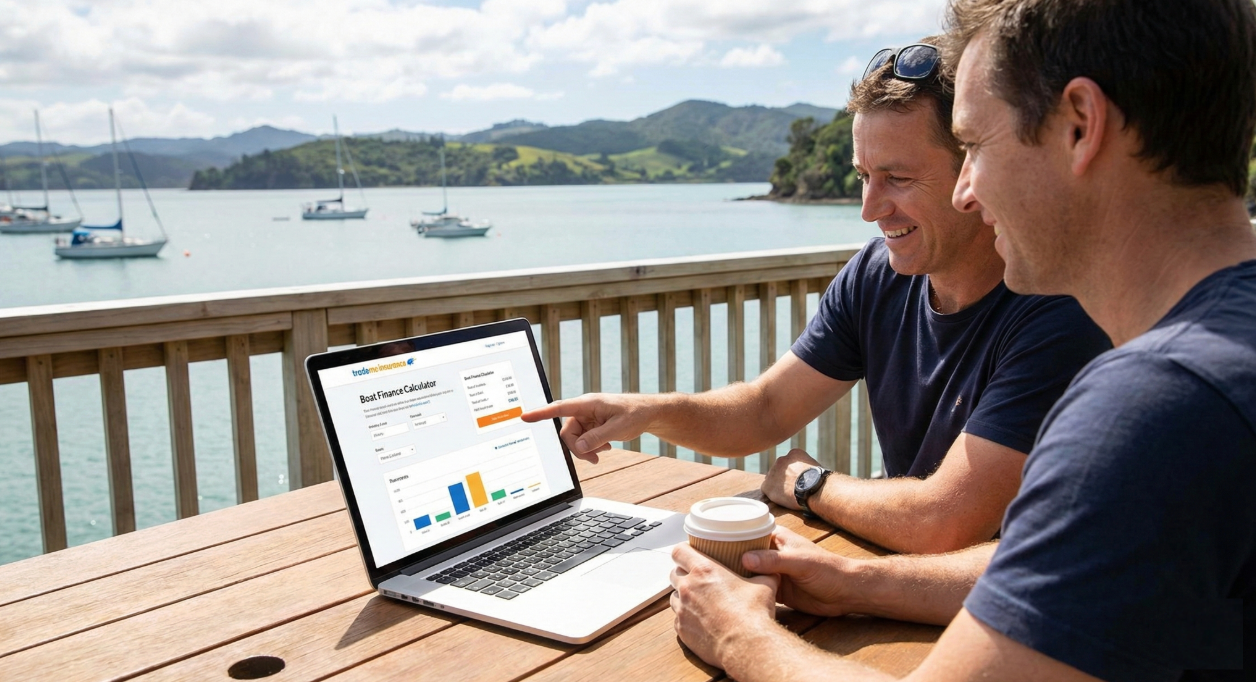
  • Fees: Establishment fees (often $200-$500) and monthly admin fees.You can use online calculators, like those on MoneyHub or lender websites, to punch in these numbers and see your estimated weekly, fortnightly, or monthly costs.

Options for dealer financing

Dealer financing is very similar to car dealer finance. It is designed to be a "one-stop-shop."

  • Convenience: The dealer handles the paperwork, often integrating it with the sale process.

  • Negotiation: You can sometimes negotiate the finance rate as part of the overall deal on the boat.

  • Packages: Dealers may bundle finance with insurance and mechanical warranties.

Tip: Always get a quote from a third-party lender before you visit the dealer. This gives you a baseline to compare against the dealer's offer. If the dealer can beat your pre-approved rate, great; if not, you have a backup.

How to find the best rate

Interest rates for boat loans in NZ typically range from 9.95% to 29.95%, depending heavily on your credit profile and whether the loan is secured.

To get the best rate:

  1. Shop Around: Do not take the first offer. Use a finance broker (who checks multiple lenders) or apply with 2-3 different companies.

  2. Secure the Loan: A “secured loan” (where the lender can claim the boat if you don't pay) almost always has a lower rate than an “unsecured” personal loan.

  3. Deposit: A larger deposit reduces the lender's risk, which can help you negotiate a lower rate.

Typical terms and things to look out for

  • Loan Terms: Most boat loans are between 3 to 5 years. Some lenders may stretch to 7 years for newer, more expensive vessels.
  • Break Fees: Ask if there are penalties for paying the loan off early. If you sell the boat in two years, you don't want to be hit with a massive fee to close the account.

  • Balloon Payments: Some deals offer low monthly payments with a large "lump sum" (balloon) payment at the end. Be careful with these—you will still owe a large amount of money when the term finishes.

  • Hidden Costs: Look for PPSR fees (usually small, around $10) and brokerage fees which can be added to the loan balance.

How common is 100% finance?

While most lenders prefer a deposit of 10% to 20%, 100% finance (no deposit) is available.

  • Availability: It is generally reserved for borrowers with excellent credit and stable income.

  • Risk: borrowing 100% of the value means you are immediately in “negative equity” (owing more than the boat is worth) due to depreciation.

  • Cost: You may pay a higher interest rate for a no-deposit loan because it is riskier for the lender.

What to know if you have bad credit

Having bad credit does not mean you can't buy a boat, but it does change the landscape.

  • Specialist Lenders: Some finance companies specialise in “second tier” lending for people with credit hiccups.

  • Expect Higher Rates: To offset the risk, lenders will charge higher interest rates, often between 15% and 28%.

  • Deposit is Key: You will almost certainly need a deposit (often higher than standard) to get approved with bad credit.

  • Be Honest: Disclose your credit history upfront. Brokers can often advocate for you if they know the full story, rather than having the lender find a surprise default during the check.

Ready to find your dream boat?

Now that you have a clearer picture of how to finance your vessel, the fun really begins. Whether you are after a family runabout, a jetski for summer thrills, or a fishing boat for the open ocean, your perfect match is out there.

Start browsing thousands of boats for sale on Trade Me Motors today and get ready for your next adventure on the water.

Author

Eve Hodgson
Eve Hodgson

With a passion for research and content, Eve loves diving into the data to find answers for Trade Me's users. As the Senior SEO Manager, her goal is to provide the most helpful and practical advice possible, ensuring every customer can make a confident purchase.